Dancing Line is a rhythm-driven action game that asks players to guide a growing line through a parade of visually distinct worlds, each scored with original background music that shapes how you move. In Dancing Line the core challenge comes from listening closely to beat and melody while timing single taps to make sharp turns, dodge obstacles and adapt to shifting environments; the result is a simple-to-learn but demanding reflex test tied directly to its soundtrack. This introduction walks through the gameplay, progression, visual design and player experience so you know what to expect before installing.
Each level in Dancing Line is built around an original composition that determines both pace and obstacle placement, so music and level design feel integrated rather than separate. One-finger controls keep input minimal: a tap makes the line turn at the next junction and sustained concentration is replaced by repeated precise taps. Games include a practice mode designed for short sessions, allowing players to experiment with timing and learn a level’s layout at leisure, while main stages increase in complexity to offer a satisfying skill curve. The levels are grouped into visually themed worlds with distinct moods and hazards, and the minimal interface emphasizes rhythm and reflexes over menus and settings.
Gameplay centers on listening to melodic cues and converting them into timed taps. The tap-to-turn mechanic is straightforward: one tap causes a turn at the next corner, and chaining taps controls the angle and sequence of those turns. That simplicity hides the depth of pattern recognition and timing; players must anticipate changes in tempo and react quickly to obstacles that may appear in rhythm or as off-beat surprises. Precision matters more than speed in many sections, so the design rewards careful listening and practiced timing. Controls are intentionally suited to one-handed or on-the-go play, making Dancing Line a convenient choice for short sessions on mobile devices.
Levels are arranged into worlds that gradually introduce new mechanics and tougher obstacle layouts. Early stages focus on establishing rhythmic patterns and comfortable turn timing, while later worlds layer in faster tempos, tighter corridors and environmental traps that test reflexes. Progression is based on completing stages in sequence; this encourages mastery, since replaying a level to improve timing or accuracy is a natural part of advancing. Practice mode reduces immediate pressure and allows repeated runs to learn tricky segments. Although there is no online multiplayer or global ranking included, the game’s internal scoring and timing challenges encourage repeat attempts to beat personal bests and achieve cleaner runs.
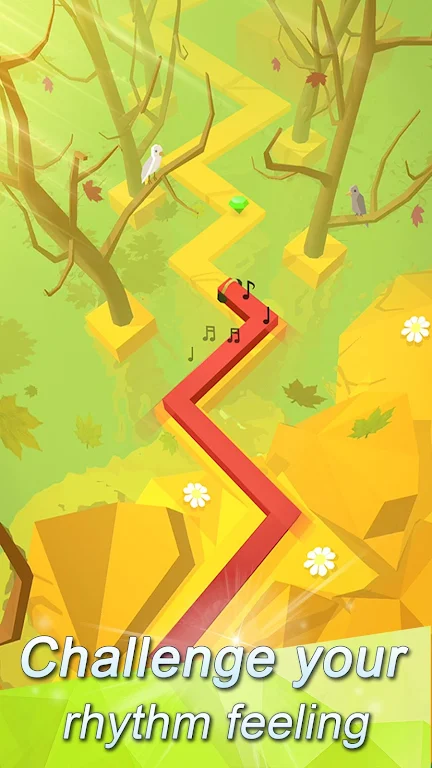
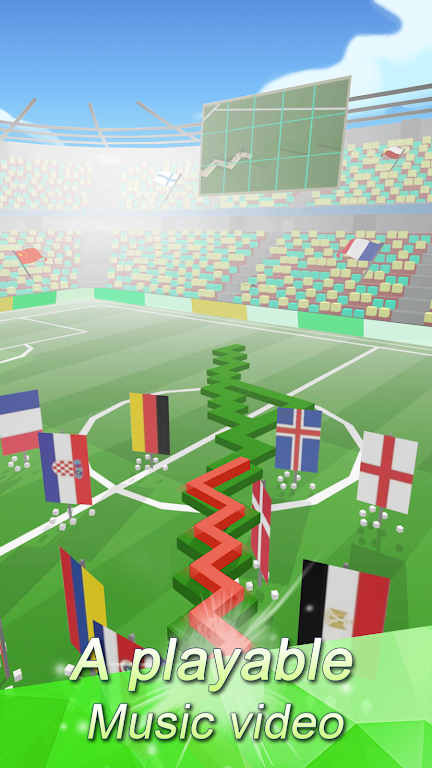
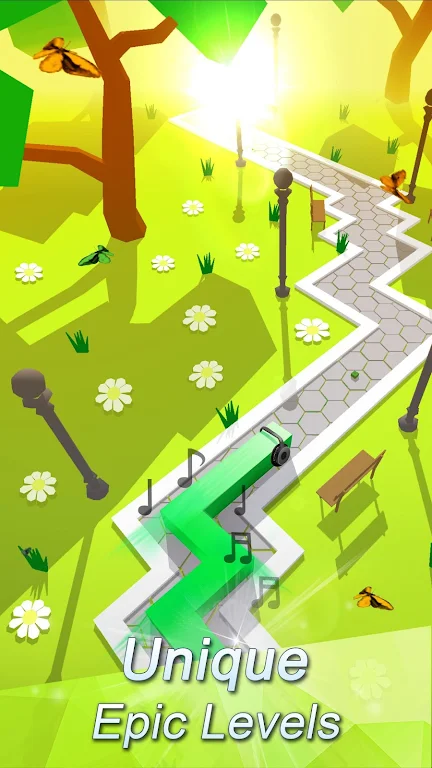
The visual presentation uses a minimalist aesthetic with color, shape and movement to reinforce musical mood. Each world employs a distinct palette and set of visual motifs so that musical shifts are mirrored by environmental changes, which helps players read cues visually as well as aurally. The original soundtrack is central to the experience: composers craft each track to guide the player through peaks, rests and transitions, making the audio more than background decoration. Visual and audio elements work together to create memorable set pieces and atmosphere without cluttering the screen with unnecessary HUD elements.
Replay value comes from mastering patterns, improving reaction timing and exploring how different levels respond at higher speeds. Because levels are concise, it’s easy to slot in a quick practice run or commit to several attempts when working toward a personal best. The one-finger control scheme lowers the entry barrier and makes the game accessible to a wide audience, while the increasing challenge provides depth for players focused on precision. Offline play is supported for regular runs, so you can practice and enjoy levels without an internet connection; this keeps the experience private and uninterrupted by network requirements.
Accessibility is addressed through simple controls and a practice mode that reduces immediate difficulty pressure; these options help beginners learn timing and rhythm without frustration. The format trains concentration and reflexes and offers a satisfying audio-visual feedback loop when runs go well. On the flip side, the steep increase in difficulty in later worlds and the minimalist one-button input may feel limiting to players seeking deeper mechanical variety or slower-paced progression. Overall, Dancing Line is best suited for players who enjoy music-driven reflex challenges and short, repeatable levels that reward listening and timing.
File size: 164.30 M Latest Version: 2.7.72.00
Requirements: Android Language: English
Votes: 139 Package ID: com.cmplay.dancingline
Developer: Cheetah Games

Best Action Necessary Games for Android
Experience nonstop thrills with our newest edge-of-your-seat action game! With console-quality graphics and intuitive touchscreen controls, you'll be drawn into high-octane combat and stunt-driven gameplay. Choose from an arsenal of upgradable weapons and vehicles to blaze through enemy bases, post-apocalyptic cities, and more. Physics-based action packed with explosions and destructible environments make every level more intense than the last.






LIVE A HERO
Retro Hero Mr Kim
Empire of Passion
Arcane Quest Legends
Magic Snap: Momotaro
AllStar Manga Heroes
Lunescape
ONE PIECE Thousand Storm JP
Tap Titans 2