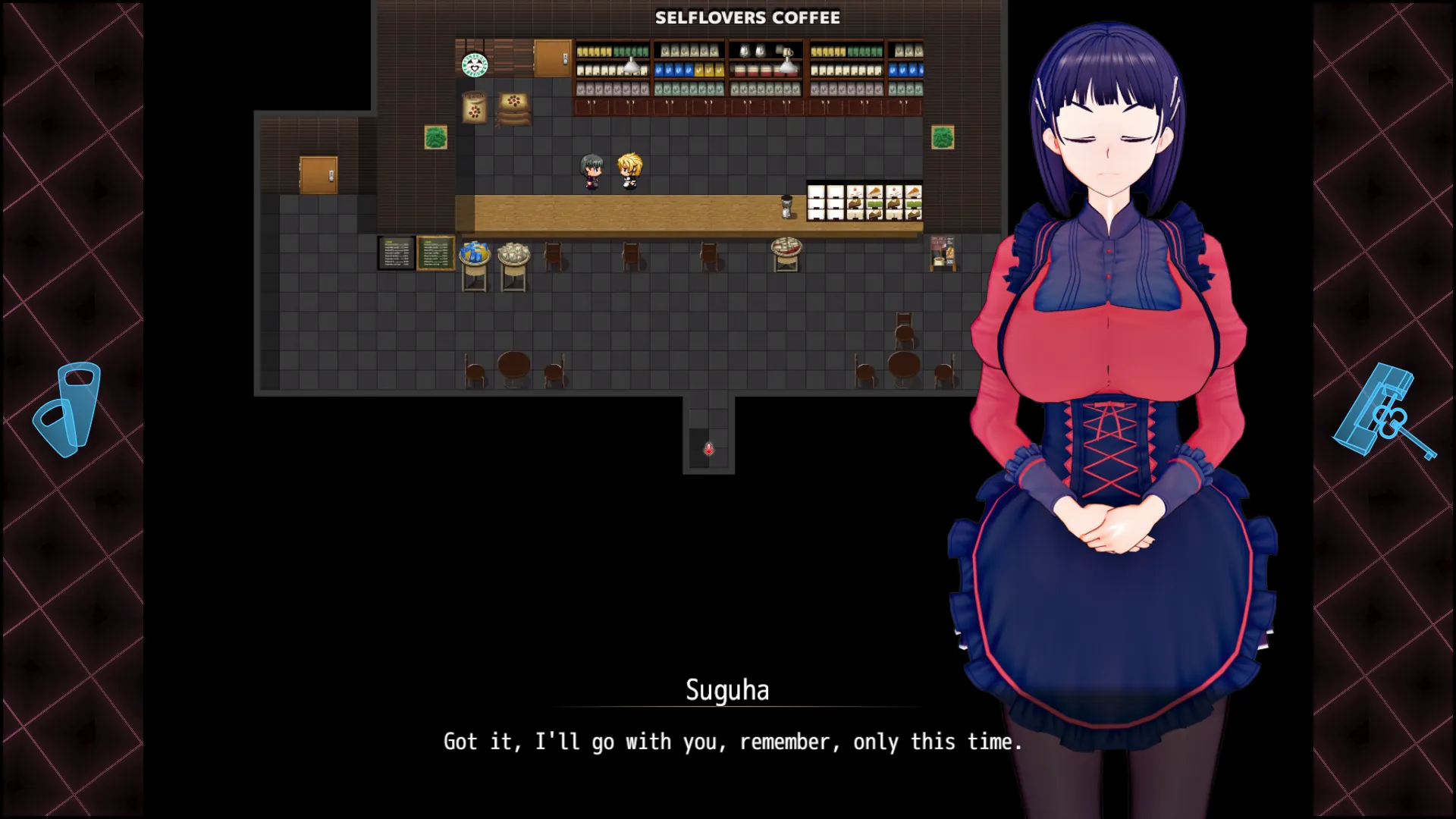
The Family Sin places you in the role of an adult newcomer starting a life in one of the oldest, most remote cities, and this edition of The Family Sin emphasizes intimate, character-driven storytelling where everyday choices shape outcomes. Rather than action-driven sequences, the game grounds you in ordinary responsibilities: a new job taken to support household needs, a rotating set of local obligations, and the quiet accumulation of decisions that affect relationships and routines. This introduction focuses on atmosphere, interpersonal details and time-based systems, making the title a good match for players who enjoy slow-burn narratives and deliberate pacing.
Gameplay centers on routine management and conversational choices. You follow a daily agenda that balances work shifts, household duties and optional local activities such as community events or continuing education courses. Interaction is handled via touch-friendly controls: taps to move between locations, swipes for navigation and clear dialog prompts that present multiple response options. Menus are intentionally lightweight so you can quickly check objectives, finances and relationship markers without breaking immersion. Tasks vary from short, repeatable job duties to longer narrative scenes at home or around the city; these are presented as clear objectives rather than complex control schemes, keeping the focus on decision-making and pacing.
Progression in The Family Sin is driven by time management, resource allocation and the social consequences of your choices. Instead of experience points or combat levels, advancement emerges from building trust with neighbors, coworkers and relatives, and from balancing a modest economy of money and time. Challenges are situational: covering extra shifts to pay a bill, preparing for a certification or exam while maintaining household responsibilities, or de-escalating tensions during family conversations. The trade-offs are deliberate—taking overtime boosts your finances but can strain relationships, while prioritizing personal connections may slow financial progress—so learning to balance short-term needs and long-term goals is the primary game challenge.
Visually the game adopts a moody, historic palette that highlights age and isolation in the city’s streets and interiors. Layered backgrounds and carefully framed interiors create a sense of place; exteriors suggest weathered architecture and narrow alleys that act almost like characters in their own right. The structure is episodic, with days and story beats unfolding across curated locations rather than an expansive open world. This design choice focuses attention on meaningful moments: small, consequential scenes that reveal character backstory or shift relationships, rather than broad exploration. The aesthetic supports the narrative tone, using lighting and sound to underline emotional beats without relying on spectacle.
Although the game does not emphasize deep avatar customization, it offers meaningful player choice through time allocation, dialogue selection and optional activities. Deciding how to spend free time—taking extra shifts, joining local events, pursuing side tasks or attending classes—changes which narrative threads become available and how relationships evolve. These branching choices unlock alternate scenes and different endings, so repeated playthroughs reveal new rhythms and outcomes. Multiple save slots and clear indicators of missed opportunities make it easy to explore alternate approaches, and the game rewards experimentation with small but satisfying differences in story flow rather than relying on randomized systems.
The Family Sin is tailored for mobile play and supports offline single-player sessions, allowing progress without a constant internet connection. The interface favors readability with adjustable text size, uncluttered menus and pacing options that let players slow down or skip shorter sequences. Autosave and manual save options are available to accommodate interrupted play sessions. Controls are simple and consistent, and the presentation emphasizes clarity—dialogue choices, objectives and relationship status are displayed in a way that helps newcomers to narrative-driven games ease into the systems. Small quality-of-life features, such as activity timers and concise objective descriptions, keep longer play sessions manageable.
Install The Family Sin if you prefer reflective, slice-of-life storytelling where the satisfaction comes from managing competing needs and observing relationships develop over time. Expect a deliberate rhythm: quieter moments of character work and environmental detail dominate, while challenge arises from social and logistical dilemmas rather than reflex-based tasks. The game rewards attention to small decisions, careful time management and a willingness to explore optional content, offering a thoughtful experience for players who enjoy narrative depth and atmosphere over fast-paced action.
File size: 229.67 M Latest Version: 0.1
Requirements: Android Language: English
Votes: 468 Package ID: familysin.apk
Developer: DrGamesS



Best Action Necessary Games for Android
Experience nonstop thrills with our newest edge-of-your-seat action game! With console-quality graphics and intuitive touchscreen controls, you'll be drawn into high-octane combat and stunt-driven gameplay. Choose from an arsenal of upgradable weapons and vehicles to blaze through enemy bases, post-apocalyptic cities, and more. Physics-based action packed with explosions and destructible environments make every level more intense than the last.






LIVE A HERO
Retro Hero Mr Kim
Empire of Passion
Arcane Quest Legends
Magic Snap: Momotaro
AllStar Manga Heroes
Lunescape
ONE PIECE Thousand Storm JP
Tap Titans 2